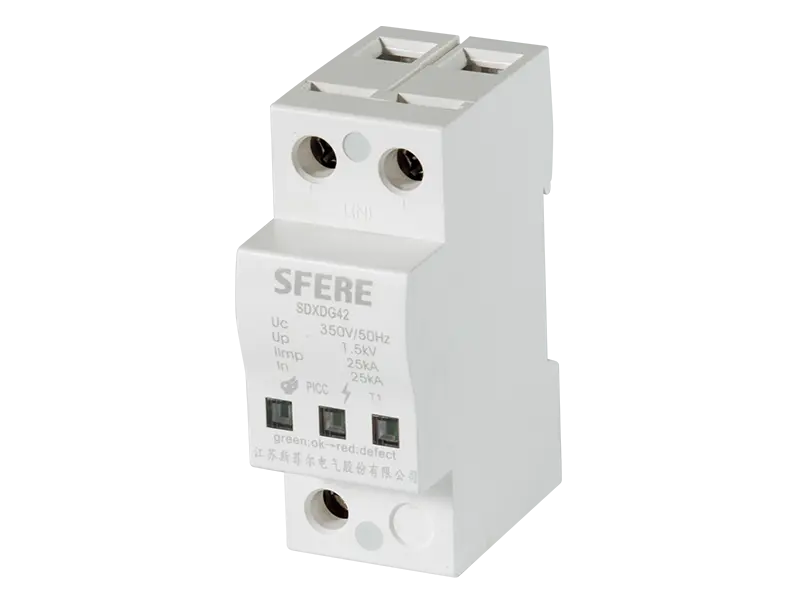
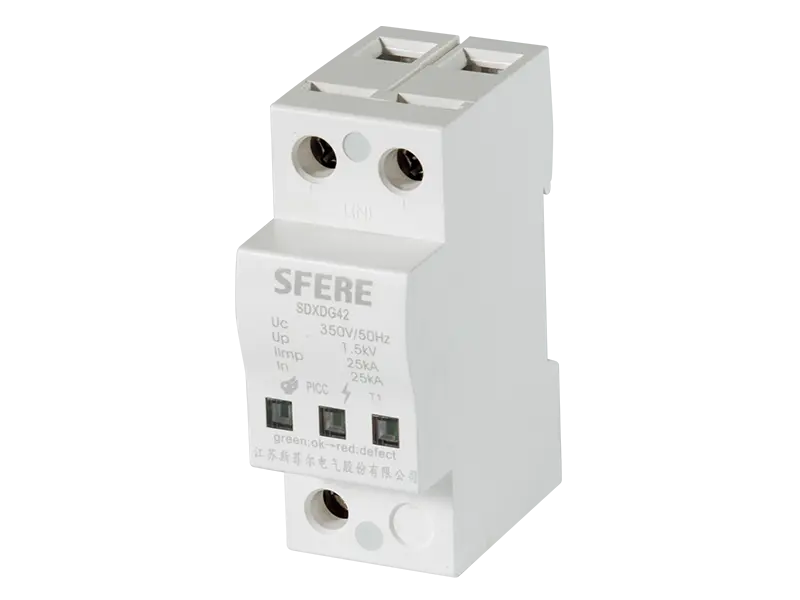
The working principle of a Surge Protection Device (SPD) is to divert excess electrical energy from transient voltage surges away from sensitive equipment and into a grounding pathway, thereby protecting the connected devices. Here's how it works:
- Voltage Surge Detection: When a transient voltage surge occurs in the electrical system, such as due to lightning strikes, power grid switching, or equipment operation, the voltage across the system increases rapidly.
- Triggering Response: The SPD detects the voltage surge and responds quickly by activating its internal components. This response is triggered based on predefined voltage thresholds.
- Diversion of Surges: Once triggered, the SPD creates a low-impedance path to divert the excess electrical energy from the surge away from the protected equipment. This pathway typically leads to the grounding system of the building.
- Voltage Limiting: As the surge energy is diverted, the SPD limits the voltage that reaches the connected equipment to a safe level. This prevents the voltage surge from exceeding the equipment's tolerance and causing damage.
- Recovery: After the surge event subsides, the SPD returns to its standby state, ready to respond to future surge events. Some SPDs may require replacement or resetting after significant surge events.